
Make the payment request easy to verify
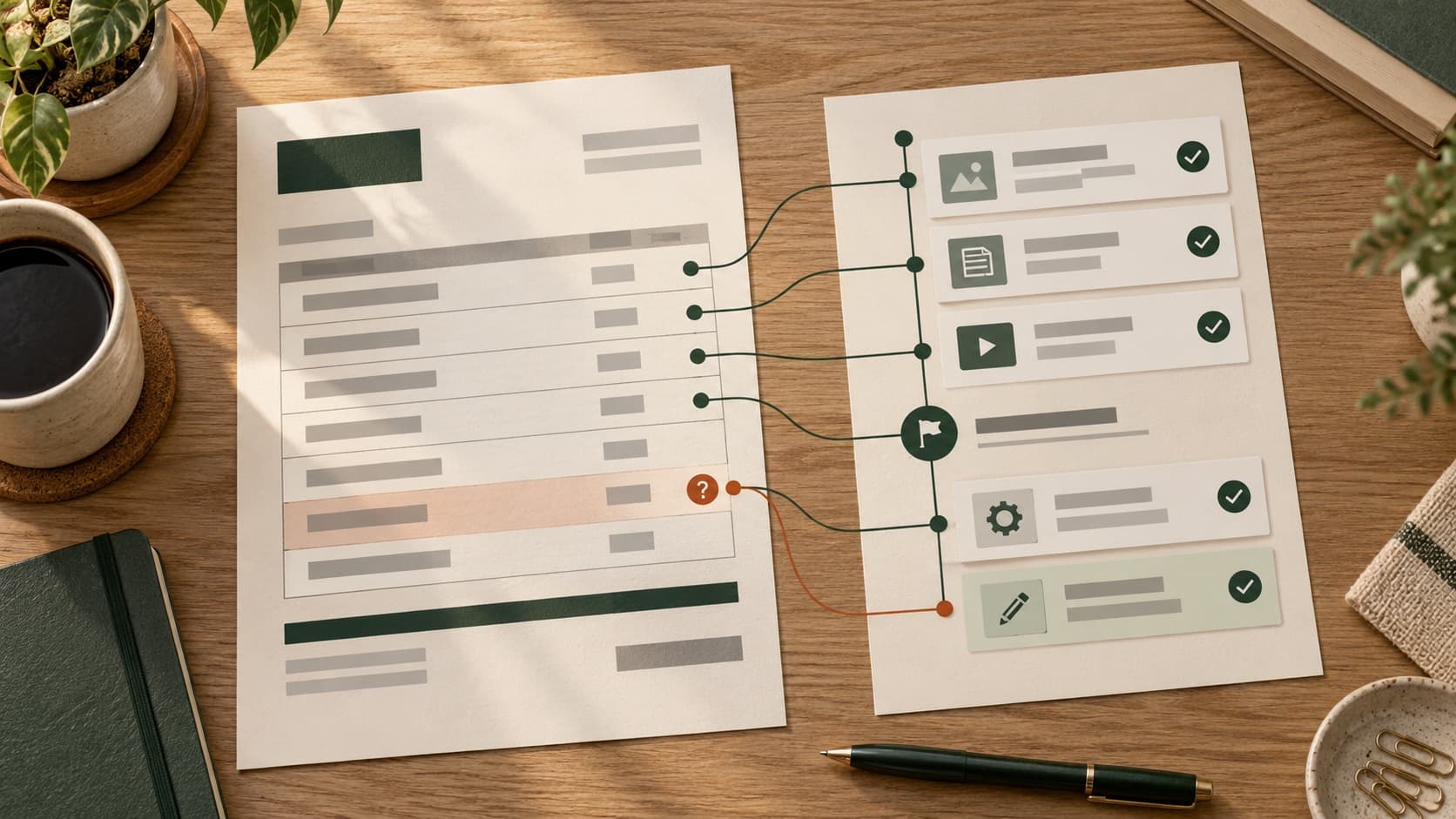
At stage four, clear figures, dates, and references help both sides resolve administrative questions before they become payment disputes.
Scroll to see all five stages
- 01ScopeScoping & ProposalsTurn the work, timing, and responsibilities into a shared plan.
- 02AgreeContracts & TermsUnderstand the wording, tradeoffs, and questions before signing.
- 03DeliverScope & CommunicationCompare new requests with the agreement and respond clearly.
- 04InvoiceInvoicing & PaymentCheck the figures and follow up without unnecessary friction.Current stage
- 05ResolveDisputes & Wind-downOrganize the facts and consider proportionate next steps.
Lucy’s Invoicing & Payment tool
Invoicing & Payment
Check invoice wording and figures or draft a factual, proportionate payment follow-up.
Your perspective
What Lucy checks
- Line items and project references
- Dates, currency, and payment terms
- Subtotal, tax, credits, and total
- Agreement-to-invoice differences
- Due date and communication history
- Proportionate follow-up wording
Streamed as it is written
Lucy’s response
Lucy will organize the response into useful sections such as:
- What matches
- Discrepancies or missing details
- Calculation and assumptions
- Questions to confirm
- Suggested follow-up
Worked example
A total that can be checked before a reminder is sent
Situation
Subtotal $1,200, tax 5%, credit $100, stated total $1,160. The agreement says Net 15 from receipt, and the invoice was received 18 days ago.
What stands out
$1,200 + $60 tax − $100 credit = $1,160, so the arithmetic matches. The timing appears three days beyond the supplied term, assuming receipt and calendar-day meaning are correct.
Useful next step
Send the invoice number, issue and receipt dates, amount, supplied due-date basis, and payment instructions. Ask whether anything administrative is blocking approval before escalating.
Make the invoice easy to reconcile
A clear invoice lets the recipient connect a charge to the agreement, completed work, and internal approval route without reconstructing the project.
- Use a unique invoice number, both parties’ correct details, currency, issue date, and a clearly derived due date.
- Tie line items to projects, purchase orders, milestones, time periods, or approved changes.
- Show subtotal, tax basis, credits, total, prior payments, and payment instructions separately.
Escalate in measured steps
A useful follow-up becomes firmer as the record develops without inventing penalties or accusing someone before the cause is known.
- Before due: confirm receipt and whether the approver needs anything else.
- Newly overdue: restate the amount and due-date basis, attach or link the invoice, and request a payment date.
- Repeatedly overdue: summarize earlier follow-ups, name a response point, and refer only to remedies actually found in the agreement or applicable process.
What this tool cannot decide
The calculator checks supplied arithmetic, not tax treatment, currency conversion, invoice validity, or whether a fee or credit is contractually applicable.
When human expertise matters
Ask an accountant or local adviser about tax, withholding, cross-border invoicing, statutory invoice requirements, insolvency, or material collection decisions.
Continue with the record

Common questions
What does the invoice checker review?
It checks the information you provide for clear line items, dates, totals, currency, payment terms, expenses, credits, and project references, and can compare them with supplied agreement terms.
Can Lucy recalculate an invoice total?
Yes, when the necessary figures are present. Lucy shows the calculation and states assumptions instead of silently changing an amount.
Can Lucy write a late-payment reminder?
Yes. She can draft a factual, proportionate follow-up based on the due date and communication history you provide, without inventing fees, threats, or payment status.